

Hand Embroidery - Ideas for upcycling any outfit
Upcycling has long history in Indian households, I remember how mom used to buy clothes for me on Diwali, just once a year! And other times it was either me wearing hand-me-downs from my siblings, or wearing dresses made from mom’s old sarees. And sometimes mom takes clothes to the Rafoogar to get them mended. All of this would leave me rolling my eyes at mom. But today, I understand her. She had lots of ideas for upcycling things even before it was popular! Maybe the reasons for upcycling have changed from economizing to reducing waste but the methods have remained the same.
So, What is upcycling?
Upcycling is a term used in various contexts. With respect to textiles, it means creatively repurposing old and new textiles to reduce wastage and pollution.
Ideas for upcycling clothes and fabrics?
Following are the ideas for upcycling a garment in various ways.
- Dyeing clothes
- Painting on clothes
- Add patches or beads to redecorate clothes.
- Turning scarps of fabrics into scrunchies or pouches.
- Hand Embroidery on fabrics.
- Redesigning clothes. Eg. - such cutting up your jeans into shorts, making kurtas from old sarees, etc. The only limit is your imagination! If you are wondering where to start, we have this detailed DIY tutorial about Patch Embroidery to help you start off.
What is Hand Embroidery?
Hand Embroidery is basically a method used to patch up a tear or maybe a stain with an embroidered design. If you are wondering how skilled of an artist you need to be, know this – anyone with a beginner’s level skill at handling a needle and thread can take up this fun project!
For this project we are using a hand embroidery design as a patch for a pair of jeans. You can choose your own material and design.
Materials Needed for the hand embroidery DIY project.

PRODUCT TO UPCYCLE.
- The fabric that you want to patch
- Needle
- Thread
- Thread Cutter
- Embroidery Frame
- Hand embroidery design
- Tracing Paper
- Water Erasable Pen

Before stitching, there are some things that you should be aware about.
- Decide the colour scheme of your hand embroidery design in advance.
- There are various types of hand embroidery stitches.
Choose Your - Colour Scheme

You can use any of those based on your skill level and preference.
- Stem stitch
- Chain stitch
- Back stitch
- Satin stitch
- Herringbone stitch
- Fishbone stitch
- Buttonhole stitch

*If you are a beginner, choose a design that is easy to work with. Also keep in mind the hand embroidery stitches that you would like to use in the design.
PROCESS
1. Choose a design.

2. Take the printout of your design keeping in mind the size of the patch.

3. Trace your design on a tracing paper.

4. Make holes on the tracing(khakha) paper using a pin such that the holes trace the design.

5. Draw the design from paper (khakha) to fabric using a water erasable pen. The holes traced will help you print the design on the fabric.
6. Stitch the traced design.
Motif in process :
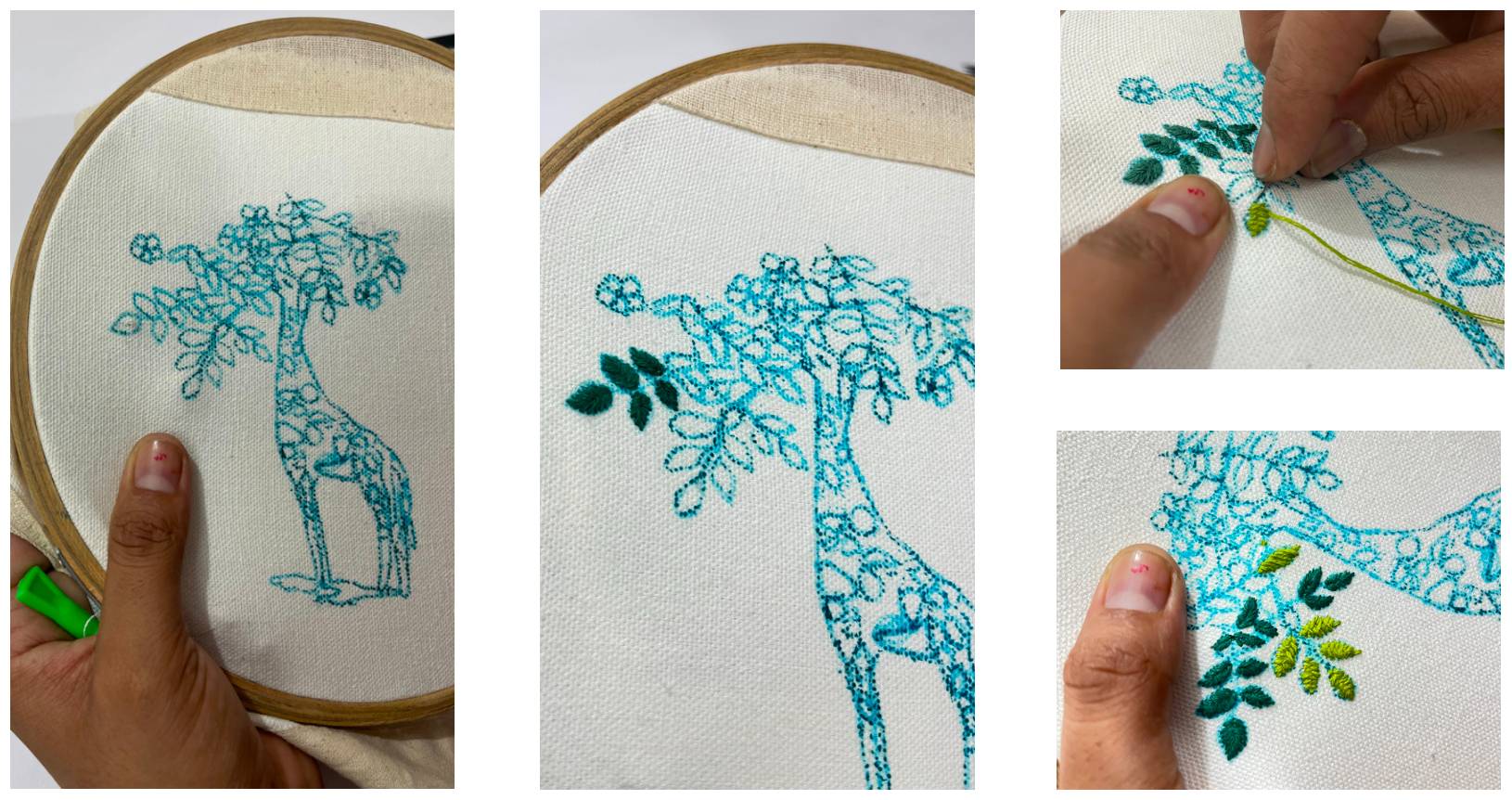
We have used
- Satin, herringbone and fishbone for leaves.


- Buttonhole & satin for flowers

- Chain stitch, back stitch and Kantha stitch to fill the patch area of the giraffe.
7. After you are satisfied with the hand embroidery pattern apply reversible fusing to the design.

8. Cut the hand-embroidered design and secure the boundaries with fabric glue or blanket stitch.

Patch wherever you want to!

Now, all you have to do is flaunt that cool hand embroidery design!!
Conclusion
Growing up in India, many of us have deep memories of how frugal our parents and grandparents were with clothing. Hand‑me‑downs were treasured and hardly any fabric was ever wasted. My own family shopped for new outfits only on festivals like Diwali, and between those celebrations I wore my elder sibling’s shirts or dresses cut out from my mother’s old saris. This practice is not an exception; it reflects a heritage of upcycling and recycling that is woven into Indian culture. Historic clothing from across the subcontinent was made from locally available materials and designed for all ages; when garments reached the end of their life, they were repurposed or passed down, reducing waste and cutting carbon emissions From tiny babies wrapped in soft, second‑hand clothes to heirloom sarees lovingly handed down for generations, Indians have always understood that “one person’s trash is another person’s treasure”curiositysavestheplanet.com.
In the modern sustainability movement, this ethos is known as upcycling. Unlike recycling, which breaks materials down at the molecular level, upcycling transforms waste into higher‑quality products and extends the life of existing materials. It is a creative process that involves simple yet mindful alterations—adding embroidery, dyeing, painting, patchwork or redesigning—to give garments a second life. Upcycling plays an important role in the circular economy because it keeps textiles out of landfills, reduces demand for new raw materials and minimizes environmental damage When you repurpose your clothing or turn leftover fabric into a pouch or scrunchie, you are not only conserving resources but also lowering greenhouse gas emissionsplasticreimagined.org. That connection to climate action elevates upcycling from a hobby to a responsible fashion practice.
Traditional Indian crafts provide perfect examples of how upcycling can be both functional and artistic. Patchwork quilts such as godhadi are stitched from old sarees and dhotis and still used in many homescuriositysavestheplanet.com. Chindi rugs are made from woven strips of leftover cotton fabric, while Kantha embroidery—a running stitch technique dating back to the pre‑Vedic era—repurposes threads from old sarees and dhotis to embellish new textiles. These crafts are not only economical; they are expressions of creativity and memory. When my mother embroidered over a tear in my jeans or took me to the local rafoogar (mender) to repair worn garments, she was practicing visible mending long before it became fashionable. Today, adding motifs through hand embroidery or botanical dyeing, cutting jeans into shorts or turning a sari into a kurta are modern takes on the same principle: use what you have, make it last, and make it beautiful.
Beyond cultural nostalgia, upcycling has measurable benefits. The global upcycling market is projected to reach tens of billions of dollars, showing its economic potentialplasticreimagined.org. More importantly, upcycling significantly reduces the amount of material entering landfills, helping to keep hazardous dyes, microfibers and synthetic fibres out of the environment By minimizing demand for virgin materials, it conserves water and energy, cuts down air and water pollution, and lowers overall carbon footprints. Studies point out that every piece of upcycled clothing saved from landfill decreases greenhouse gas emissions and supports a circular economy These environmental and social benefits have inspired a new generation of artisans, designers and conscious consumers to reimagine waste as a resource. When you buy upcycled products, you are investing in more than style—you are backing a system that values people, planet and profit.
This sustainable philosophy aligns perfectly with the mission of Suvetah, a brand dedicated to ethical fabrics, natural dyeing and zero‑waste craftsmanship. Suvetah’s collection of organic cotton, hemp, bamboo, kala cotton, lotus fibre and other eco‑friendly textiles allows designers and homemakers to create garments that are both luxurious and planet‑positive. Their hand‑dyed and eco‑printed fabrics are ideal canvases for upcycling projects, whether you’re hand‑embroidering patches, making quilts or designing ready‑to‑wear collections. By sourcing responsibly and offering small‑batch manufacturing, Suvetah ensures that sustainability and style go hand in hand. When you upcycle an old outfit with Suvetah’s natural fabrics or repurpose their beautiful leftover pieces into accessories, you are continuing a tradition that honours craft, conserves resources and reduces waste.
The next time you consider discarding an old garment, remember the generations of Indian families who saw value in every scrap of fabric. Be inspired by the craftspeople who turned discarded cloth into quilts, rugs and artful embroiderycuriositysavestheplanet.com. Think about the designers today who are transforming trash into treasure and the impact that creative reuse can have on climate change and social equityplasticreimagined.org. Upcycling is not just a trend; it is a timeless practice that marries creativity with responsibility. By embracing it—whether through hand embroidery, natural dyeing, patchwork, or imaginative redesign—you join a movement that reduces waste, celebrates heritage and champions sustainable fashion. Explore the possibilities with Suvetah’s eco‑friendly fabrics at suvetah.com, and become a part of the solution. Together we can stitch a future where every thread tells a story of care for our planet and respect for the art of making.