


Suvetah Fashion
Buy Khadi Silk Fabric Online | Handloom Cotton Silk Blend India | Suvetah
Buy Khadi Silk Fabric Online | Handloom Cotton Silk Blend India | Suvetah
Click here for bulk order, MOQ 100 meters
Couldn't load pickup availability
Forty percent handspun cotton. Sixty percent mulberry silk. Woven by hand on a pit loom by artisans whose technical knowledge of warp tension and weft rhythm was not taught from a manual but passed across generations within a weaving community. The result is a khadi silk fabric that two very different textile traditions would not produce independently of each other, and the combination creates something genuinely worth understanding before sourcing.
Key Highlights
- Khadi silk fabric blend: 40% handspun cotton and 60% mulberry silk, SKU SU-KD-101, handloom woven by artisan clusters with each metre carrying the surface variation of hand-beat construction
- GSM 89, a khadi silk material weight suited to kurtas, shirts, ethnic jackets, stoles, and saree blouses across seasonal garment production
- 44 inches wide, the khadi silk fabric width standard for Indian ethnic wear garment construction from full pattern layouts on the roll
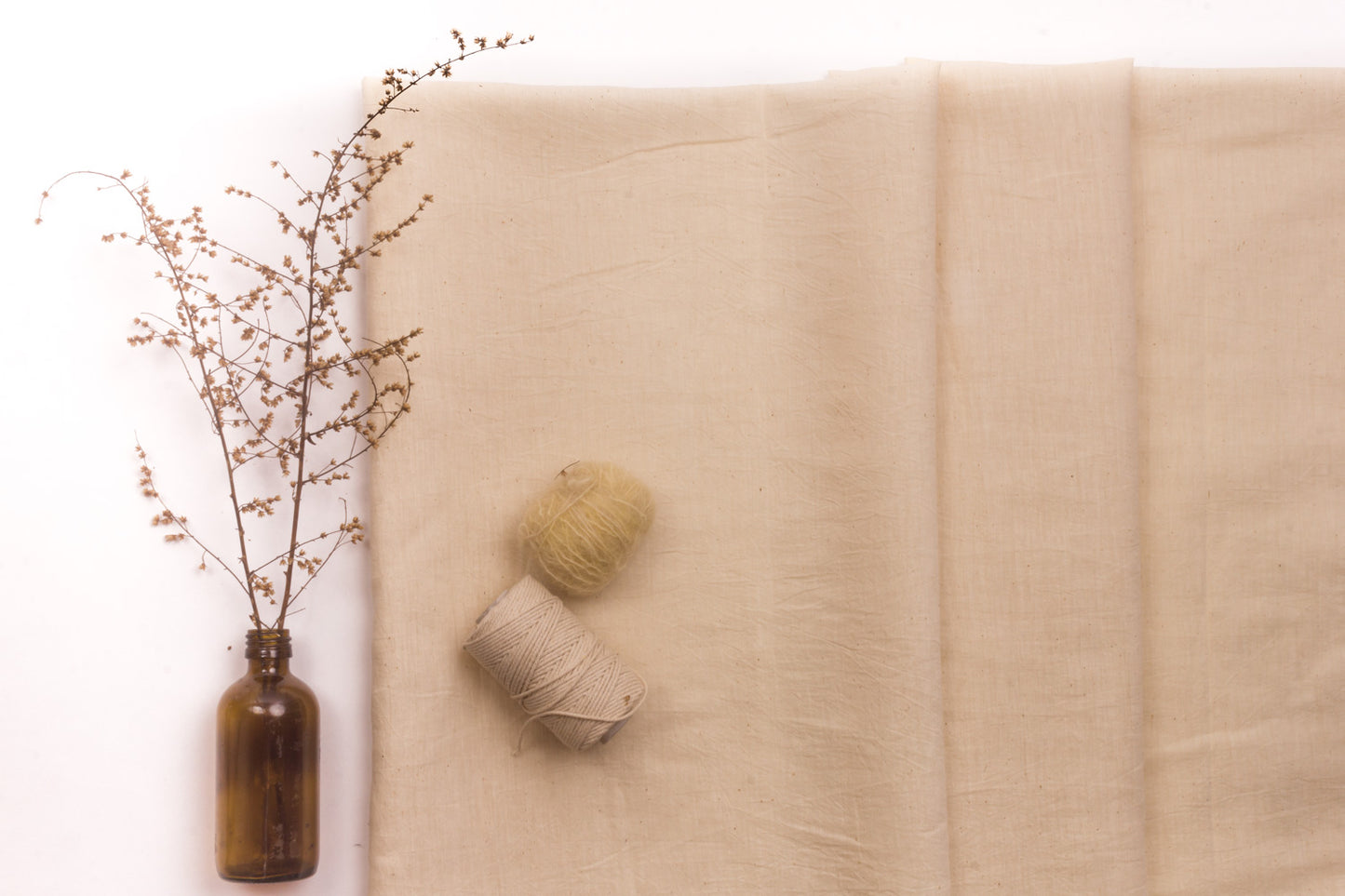
- Greige finish, supplied without dye or pre-treatment, directly compatible with natural dyeing, reactive dye, and eco-print applications on an untreated surface
- Textured handloom surface with mulberry silk sheen carried in the weft: a cloth that plain khadi cotton and plain mulberry silk each fall short of producing on their own
What Is Khadi Silk Fabric and How Is It Made
The character of khadi silk material comes from what each fibre contributes at its specific position in the weave, and from what the handloom adds to the construction that a power loom cannot replicate.
The Handspun Cotton Component
The cotton warp in this khadi silk fabric is handspun on a charkha, which produces a yarn with slight irregularity in diameter that machine-spun cotton at the same count does not carry.
- Handspun cotton warp gives the cloth a textured, slightly uneven surface that reads as artisanal at the retail level without any additional finishing treatment required
- Cotton at the warp provides the structural tension stability that handloom weaving at 89 GSM requires, holding consistent width across the 44-inch roll without distortion
- The moisture-absorbing breathability of cotton in the warp structure is what keeps natural khadi silk garments comfortable through warm months despite the silk content in the weft
The Mulberry Silk Component
Mulberry silk in the weft changes what the handspun cotton warp produces when woven together, improving several properties that plain khadi cotton cannot achieve on its own.
- Silk in the weft contributes the surface sheen and smooth touch against skin that makes khadi silk material distinctly more refined than a 100% cotton handloom equivalent at the same GSM
- Drape improves significantly with 60% silk in the composition: the finished cloth falls with a fluid quality that plain khadi cotton lacks, making it better suited to garment categories where movement matters
- The protein fibre in the weft also adds a natural lustre to the greige cloth that accepts natural dyes with greater depth and visual richness than a pure cotton base at this weight
What the Handloom Construction Adds
Buy khadi silk fabric online and what you receive that a power loom cannot produce is the natural variation in weft density from the hand-beat process, which creates the slight surface irregularity that distinguishes handloom khadi silk India cloth from machine-woven cotton-silk blends at identical composition.
- The tension variation across the handloom width produces a slightly uneven weave density that reads as handcrafted at close inspection
- Each meter of natural khadi silk woven on a handloom consumes no electrical power at the weaving stage, a measurable reduction in the energy footprint of the fabric at the production level
- Pure silk khadi India buyers who are building artisan-aligned or slow fashion collections use this surface character as a design feature rather than attempting to minimise it
Khadi silk fabric price per meter is Rs. 515 for SU-KD-101. Bulk pricing for orders above 100 meters is available on request at fabrics@suvetah.com.
Specifications
|
Detail |
Specification |
|
SKU |
SU-KD-101 |
|
Blend |
40% Handspun Cotton, 60% Mulberry Silk |
|
GSM |
89 |
|
Count |
80 |
|
Width |
44 inches |
|
Finish |
Greige (undyed) |
|
Price |
Rs. 515 per meter |
|
Delivery |
7 to 10 working days |
Usage and Application
Khadi silk material performs most reliably in garment categories where breathable structure, natural sheen, and handwoven texture are all required in the same cloth.
Ethnic Garment Applications
Khadi silk for kurta construction is the strongest application for SU-KD-101, giving the garment enough body at 89 GSM to hold a pressed collar and sleeve through a full day without stiffness. The cloth cuts and sews cleanly, holds light surface embroidery, and drapes at the hem with a fluid quality that distinguishes a khadi silk kurta from a plain khadi cotton equivalent in hand and appearance.
Contemporary and Blended Applications
The same khadi silk fabric cuts well for shirts, ethnic jackets, and stoles where the combined silk sheen and cotton breathability matter simultaneously across a single garment. Saree blouses in handloom khadi silk India production benefit from the fact that the cloth is neither as matte as plain khadi nor as smooth as plain mulberry silk: it sits between them, which is exactly the surface quality a blouse fabric for a handloom saree often requires.
Sustainability Note
Handloom khadi silk India production routes income directly to artisan weaving communities rather than to industrial manufacturing facilities, keeping value within the weaving cluster for every meter produced.
- Each meter of khadi silk material woven on a handloom consumes no electrical power at the weaving stage, reducing the energy footprint of the fabric compared to power-loom equivalents at the same GSM
- The handspun cotton component is sourced from hand-spinning communities where the charkha spinning process itself supports rural income generation independent of the weaving stage
- Mulberry silk is an animal-derived fibre: this trade-off should be disclosed clearly in finished garment positioning for brands serving consumer segments with cruelty-free purchasing criteria
Care Instructions
Hand wash khadi silk fabric in cold water with a mild detergent, keeping the soak brief and the agitation gentle to protect both the mulberry silk weft and the handspun cotton warp from mechanical stress. Wring very gently along the length of the fabric rather than twisting, then shade dry flat to prevent distortion. Iron on a low setting while the cloth is slightly damp, which maintains the natural drape and preserves the textured handloom surface across many seasons of regular washing without degrading the mulberry silk content.


Frequently Asked Questions
What is the difference between khadi silk fabric and plain khadi cotton?
Plain khadi cotton is 100% handspun cotton with a matte, rougher surface suited to casual daily wear. Khadi silk material at this blend adds mulberry silk in the weft, contributing surface sheen, a softer hand against skin, and improved drape, while the cotton warp retains the breathability and textured handloom character that plain khadi provides.
Can khadi silk fabric be dyed in custom colours?
The greige finish means the cloth carries no pre-treatment and accepts natural dyes, reactive dyes, and eco-print methods directly onto the untreated fibre surface.
What is the khadi silk fabric price per meter at Suvetah?
The khadi silk fabric price is Rs. 515 per meter for SU-KD-101. For bulk orders above 100 meters, pricing and production timelines are confirmed on request at fabrics@suvetah.com.